What Does It Really Mean to Feel Heard?
We spend a lot of time thinking about what to say.
The right response. The perfect explanation. The words that will make someone understand exactly what we mean.
But what if some of the most important parts of communication happen without words at all?
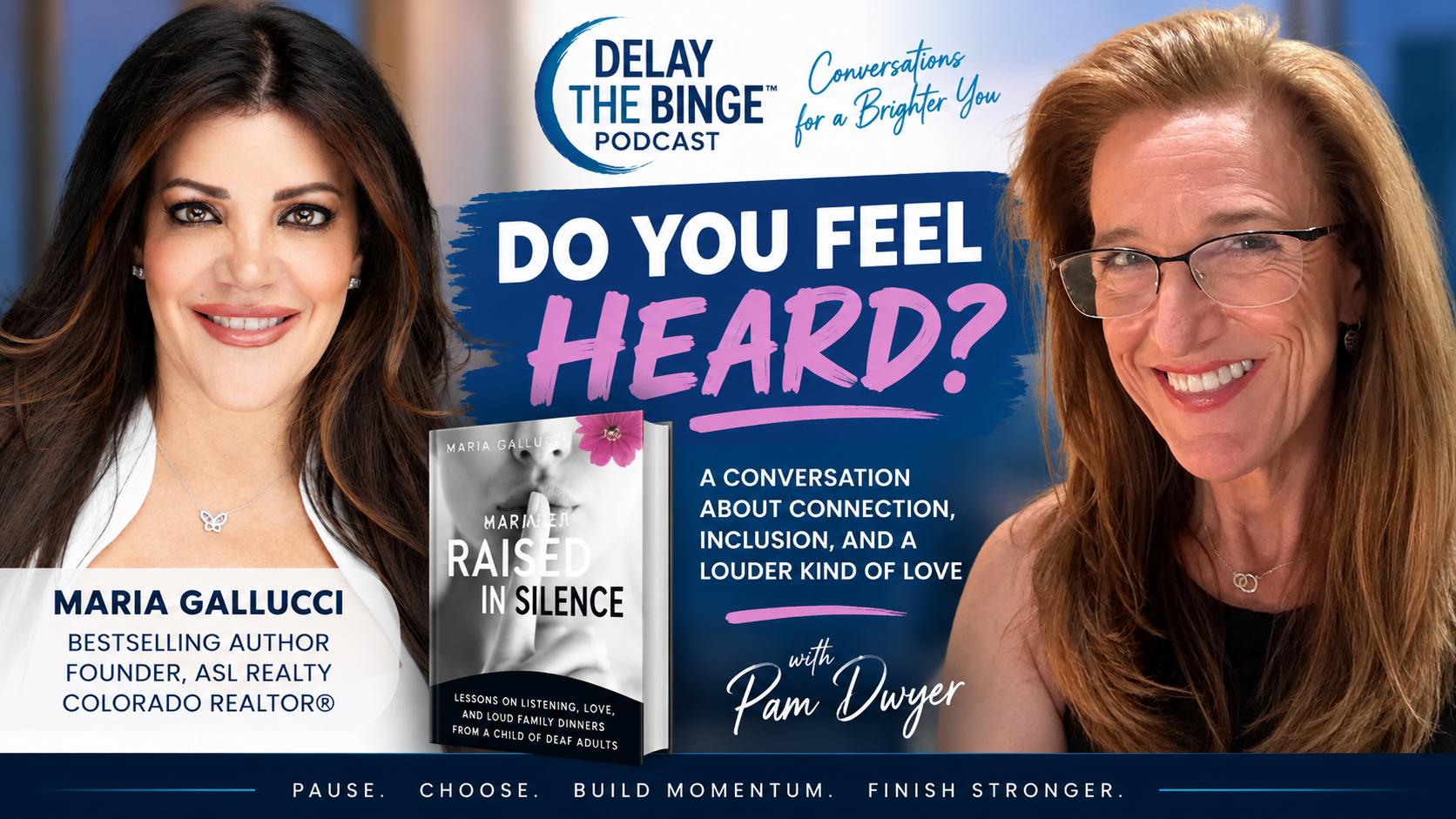
That question sits at the heart of my conversation with Maria Gallucci, bestselling author of Raised in Silence: Lessons on Listening, Love, and Loud Family Dinners From a Child of Deaf Adults.
Maria was raised by two Deaf parents. She is a CODA, a Child of Deaf Adults, and American Sign Language was her first language.
Growing up between the Deaf and hearing worlds taught Maria to pay attention differently. Facial expressions mattered. Body language mattered. Whether someone truly understood mattered.
And long before she became an author, REALTOR®, entrepreneur, or advocate, Maria learned something that would eventually shape all of those things:
Communication isn’t simply about giving someone information. It’s about whether they have the opportunity to understand, participate, and feel included.
▶ Watch the Conversation
Raised in Silence: What It Really Means to Feel Heard | Maria Gallucci
Listen Everywhere
Prefer to listen?
This conversation is available on Apple Podcasts, Spotify, Amazon Music, YouTube, and everywhere podcasts are available.
In This Conversation
Maria and I explore:
- What it means to grow up as a CODA, a Child of Deaf Adults.
- Why American Sign Language was Maria’s first language.
- What growing up between the Deaf and hearing worlds taught her about communication.
- The experience of helping her Deaf parents navigate buying a home when she was only 12 years old.
- Why accessibility means more than simply making information available.
- How facial expressions, body language, and emotion can communicate as much as words.
- The difference between hearing someone and helping them feel understood.
- How childhood experiences can quietly shape the roles and patterns we carry into adulthood.
- People-pleasing, saying yes, and learning to create healthier boundaries.
- Why belonging requires more than simply being invited into a space.
- How Maria’s childhood experiences eventually influenced her career in real estate and the creation of ASL Realty.
- Turning difficult experiences into purpose without allowing those experiences to define your entire story.
- Why Maria keeps coming back to two simple words: Just try.
But one story connected so many pieces of Maria’s life for me.
She was only 12 years old.
Twelve Years Old at a Closing Table
Maria’s parents were buying a home.
There was no interpreter there to help them understand everything happening at the closing table, so their 12-year-old daughter found herself trying to help. Think about that for a moment.
She was a child trying to navigate information she did not completely understand herself because the adults she loved deserved access to what was happening around them.
Maria did not know then that real estate would eventually become her career. She could not have known that years later she would build ASL Realty, a nationwide network designed to connect Deaf and Hard of Hearing clients with real estate professionals who communicate in American Sign Language.
She was simply trying to help her parents. But sometimes the experiences that affect us most deeply become clues. They show us what we notice. What matters to us. What we never want someone else to have to experience alone.
And sometimes, years later, we realize those experiences were quietly pointing toward something we would eventually build.
What Does It Mean to Belong?
One of the parts of our conversation that stayed with me was Maria’s description of belonging. Because belonging is not simply being allowed into the room. It is not being invited and then expected to hide the parts of yourself that make everyone else uncomfortable. It is not access without understanding.
Real belonging creates enough safety for someone to be who they actually are. That made me think about how often we talk about inclusion as something we provide for someone else. But perhaps one of the better questions is:
What does it feel like to be the person entering the space we’ve created?
Do they have to work harder than everyone else to understand what is happening? Do they feel like an inconvenience when they need something different? Can they ask a question without feeling embarrassed? Can they communicate in the way that works for them?
Can they be themselves?
Because sometimes the difference between being present and belonging is whether someone took the time to notice what you needed to participate fully.
One Moment That Stayed With Me
Maria kept returning to something wonderfully simple:
Just try.
Not: know everything first.
Not: never make a mistake.
Not: wait until you’re completely comfortable.
Just try.
Try to communicate. Try to understand. Try to learn. Try something outside your comfort zone. Try asking instead of assuming.
 Previous Post